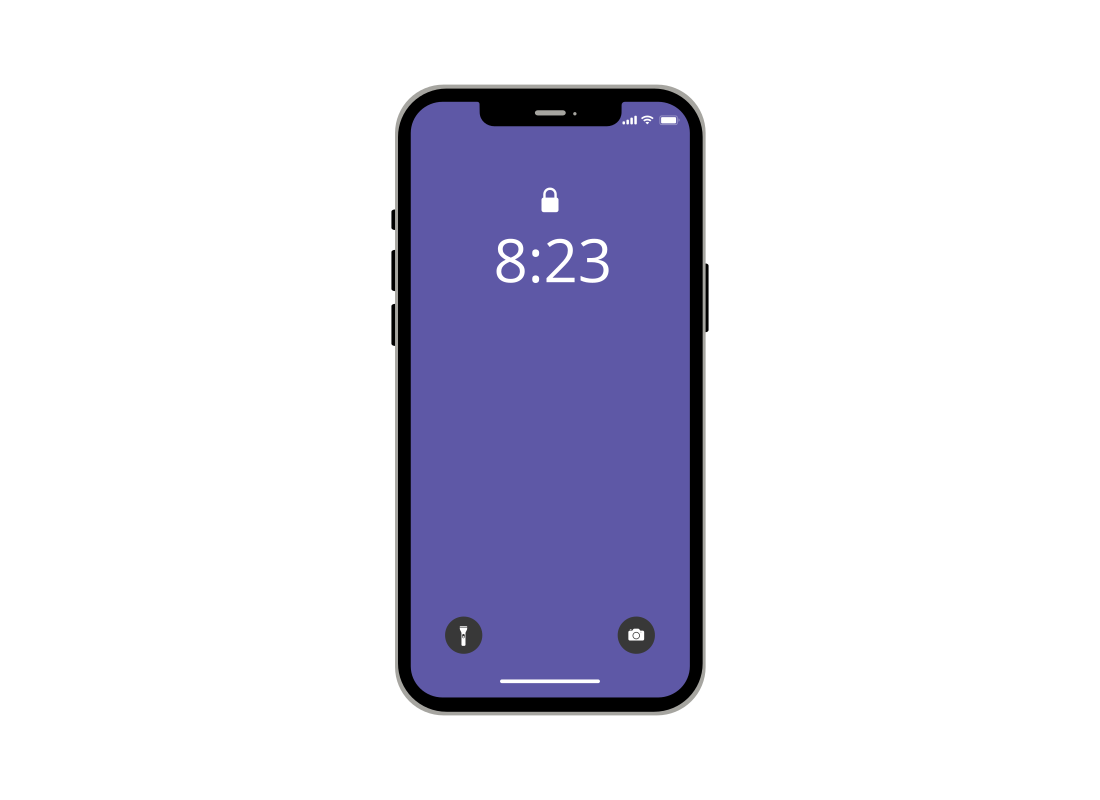
How Smartphones Have Revolutionized Our Daily Lives: A Look at the Features That Make Them Essential
Smartphones have fundamentally transformed the way we navigate our daily lives, offering a plethora of features that cater to our personal and professional needs. From instant communication to access to information, these small devices serve as powerful tools that keep us connected at all times. For instance, mobile apps allow us to manage schedules, make reservations, and handle banking transactions all at our fingertips, ultimately enhancing our productivity. The integration of voice recognition and smart assistants like Siri and Google Assistant further streamlines tasks, providing hands-free control over various functionalities that make our routines more efficient.
Moreover, the impact of smartphones extends beyond mere convenience; they have also changed the way we interact socially and consume content. With social media platforms readily accessible, users can share experiences and connect with friends and family worldwide in real-time. Features such as video calling and live streaming have enriched our communication, making it more personal and engaging. As a result, smartphones have not only become essential tools for everyday tasks but have also laid the foundation for a more connected and informed society, illustrating their revolutionary role in our modern lives.
If you're looking to enhance your driving experience with MagSafe technology, check out the Top 10 MagSafe Accessories for Cars. These accessories can streamline your charging needs and help keep your devices securely mounted while on the road. From car mounts to wireless chargers, these options are designed to make your travels more convenient and efficient.
Navigating Time with Your Smartphone: The Best Apps for Memory and Organization
In today's fast-paced world, staying organized and enhancing memory can be a challenge. Fortunately, your smartphone can be a powerful tool in this regard. Many apps designed for memory enhancement and organization can streamline your daily tasks and help you remember vital information. From task management tools to effective note-taking and scheduling apps, the options are numerous. Some of the most recommended apps include Todoist, which helps you prioritize tasks with ease, and Evernote, perfect for capturing ideas and keeping your notes organized.
Moreover, embracing technology can significantly improve how you navigate your time. Applications like Google Calendar provide a user-friendly interface for scheduling events and setting reminders, ensuring that you stay on top of important appointments. For memory aids, consider Quizlet, an app that helps reinforce learning through flashcards and interactive quizzes. Whether you are a student juggling classes or a professional managing multiple projects, integrating these apps into your routine can lead to enhanced productivity and better time management.
Are Smartphones Really The Modern Time Machines? Exploring Their Impact on Time Management and Efficiency
The advent of smartphones has ushered in a new era where they can be considered modern time machines. With a single device, users can access a wealth of information, communicate instantly, and manage tasks more efficiently than ever before. The ability to set reminders, schedule appointments, and track daily habits through various applications has transformed how we perceive and utilize time. For instance, with features like calendar synchronization, people can now plan their days with precision, reducing the likelihood of missed deadlines and forgotten commitments.
Moreover, smartphones have not only streamlined personal productivity but also reshaped our professional environments. In the workplace, tools such as project management apps and collaborative platforms allow for real-time communication and task delegation, fundamentally altering how teams operate. According to a recent study, companies utilizing mobile technology report a 30% increase in employee efficiency. This integration of technology into our daily routines challenges the conventional notion of time, ultimately enabling users to take control of their schedules and work smarter, rather than harder.